Fall lawn aerating and overseeding: timing, rates, and the full procedure
Core aerate, then seed at the verified rate for your grass species, timing counted back from the first freeze, not picked off a calendar.
Short-season yard guides, leaves, gutters, lawn, and tools before the freeze
The window is short, a few weekends between leaf drop and the first freeze. Thirty-one practical guides to clear the leaves, clean the gutters safely, winterize the lawn, put the beds to sleep, and store your tools right.
Start the reset →Core aerate, then seed at the verified rate for your grass species, timing counted back from the first freeze, not picked off a calendar.
Sunscald, winter burn, and rodents need three different protections, trunk wrap, a staked burlap screen, and a mesh guard, plus a never-wrap list.
Buds removed, tender growth triggered, disease windows opened, the three mechanisms behind fall pruning damage, and a table that sorts any plant.
Fall yard work isn't complicated, but timing matters. These guides keep it simple: what to do first, what can wait, and when to hire out instead of climbing a ladder yourself.
The window is short, leaves, beds, patios, and furniture. How to prioritize the work so the freeze doesn't beat you.
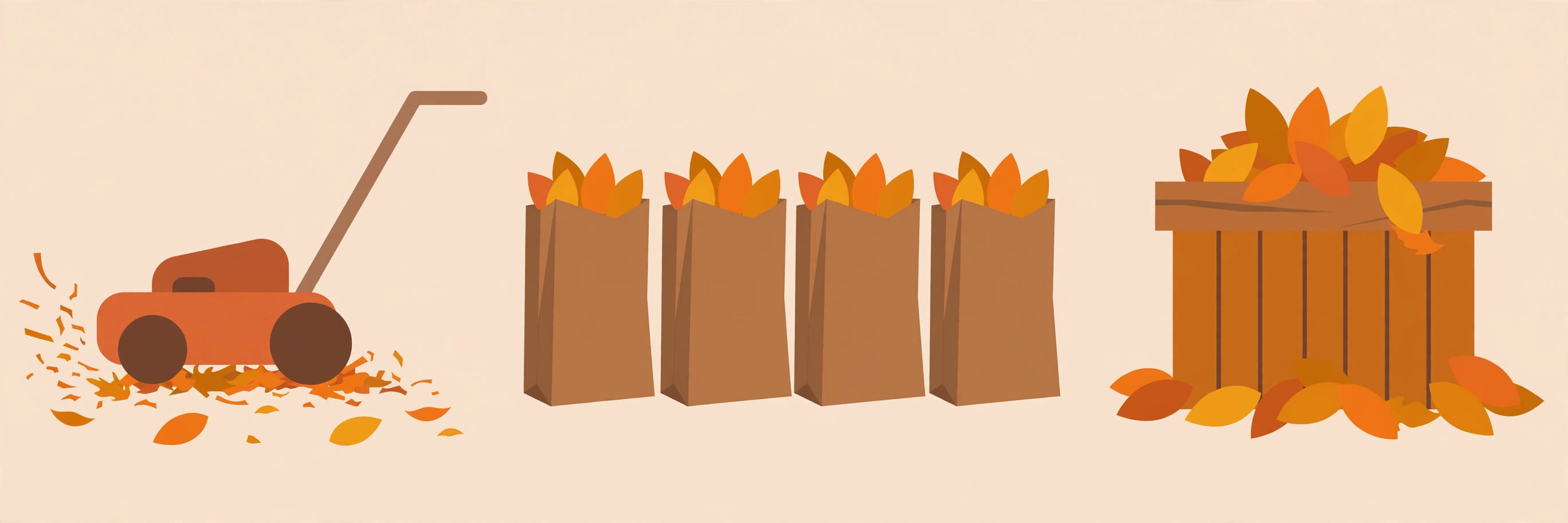
Mulch-mowing, bagging, composting, and curb programs, pick the method that fits your trees and your weekends.
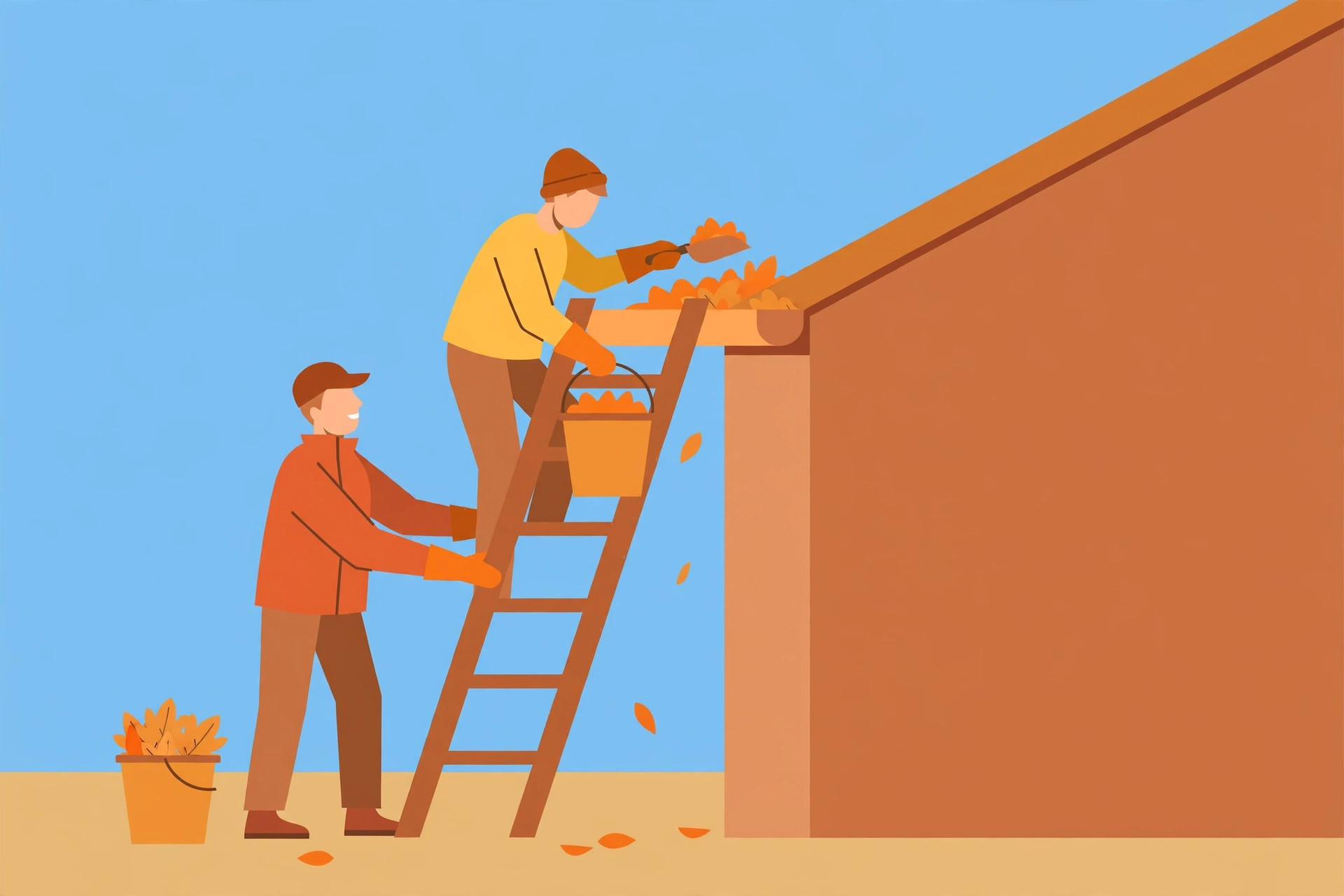
Ladder safety first, and the honest signs it's time to hire it out. What clean gutters prevent, and how to keep them clear.
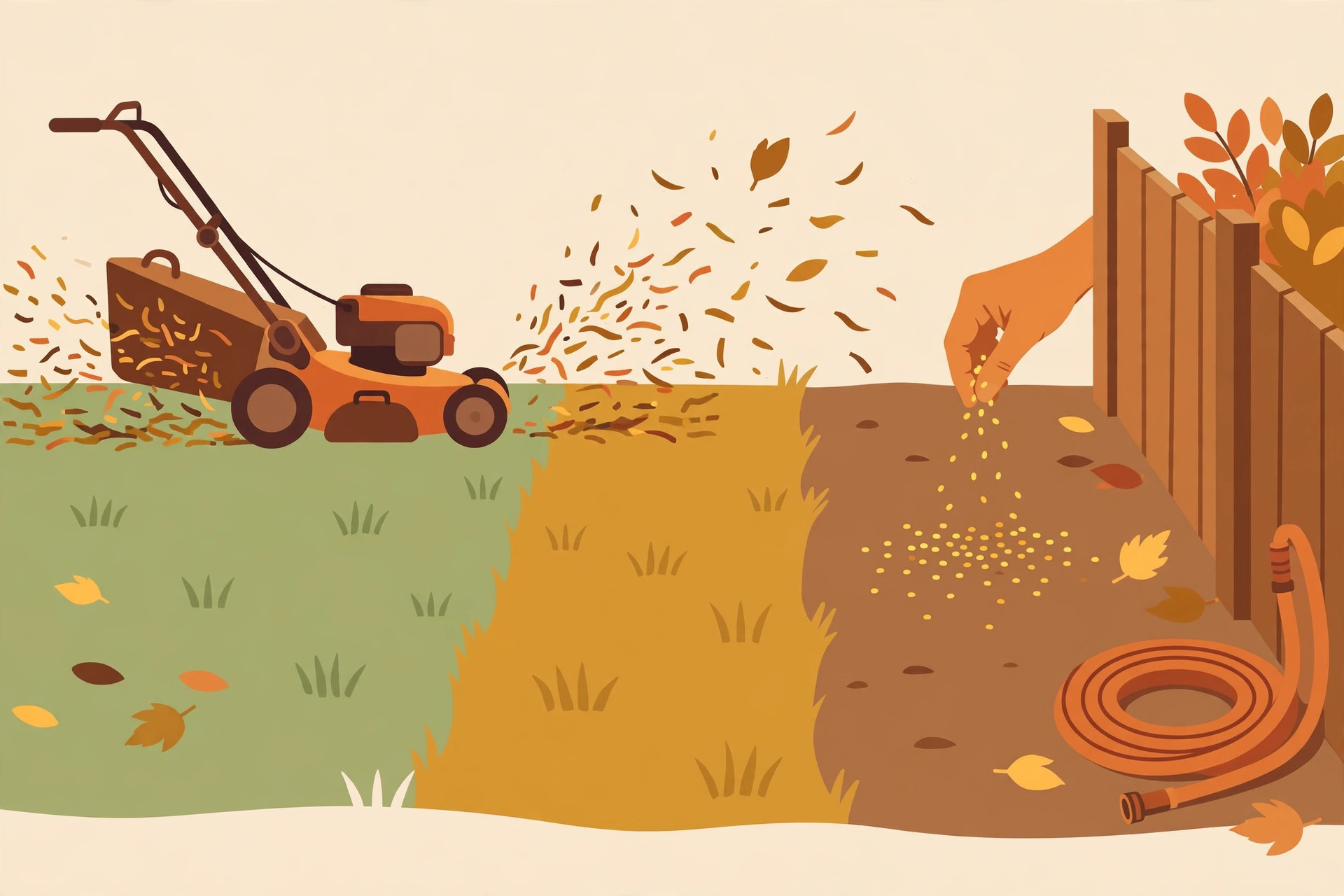
The final cut, overseeding basics, and a deep watering before the freeze, the three moves that set up spring grass.
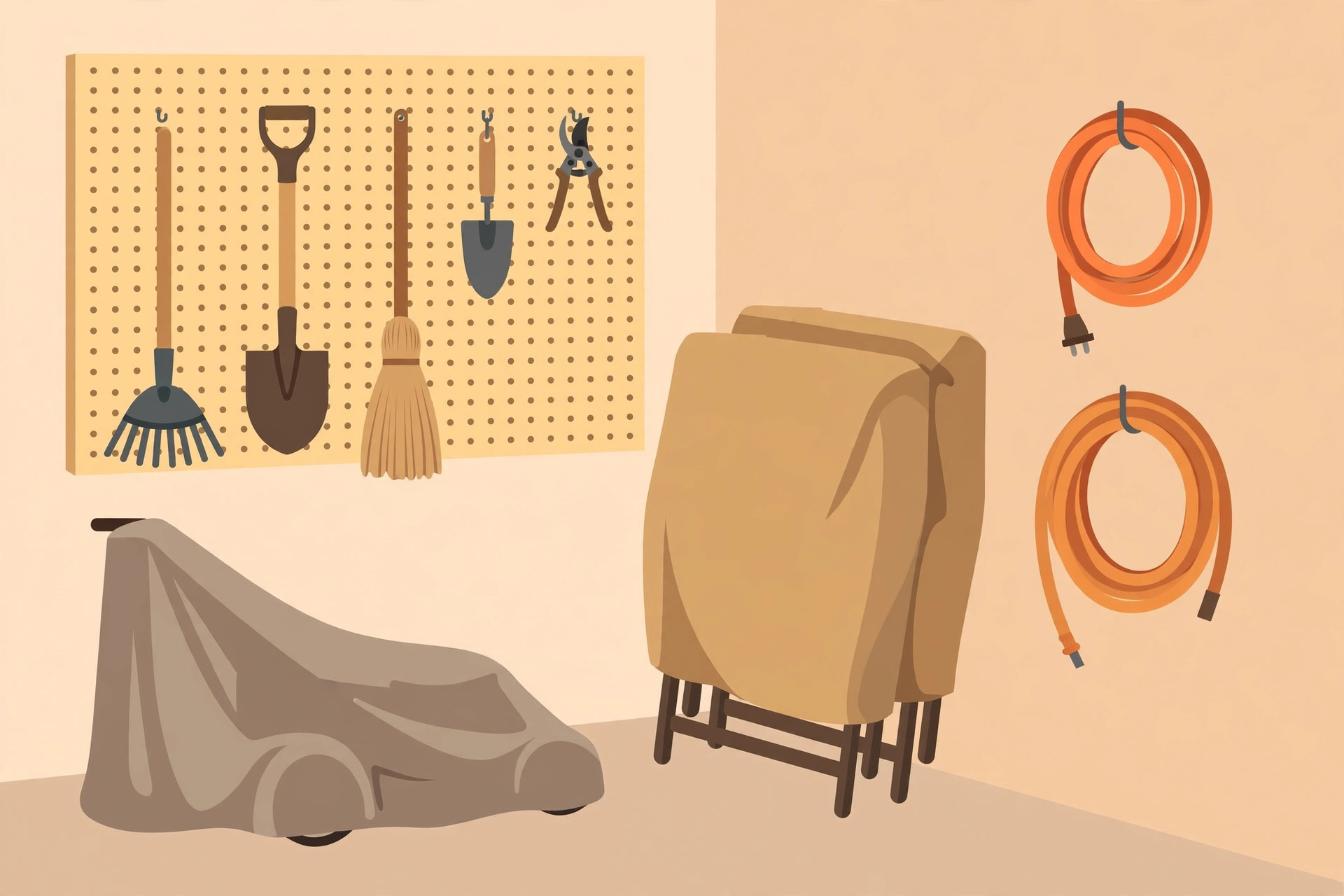
Clean, sharpen, winterize the mower, drain the hoses, and cover the furniture, so everything works again in spring.
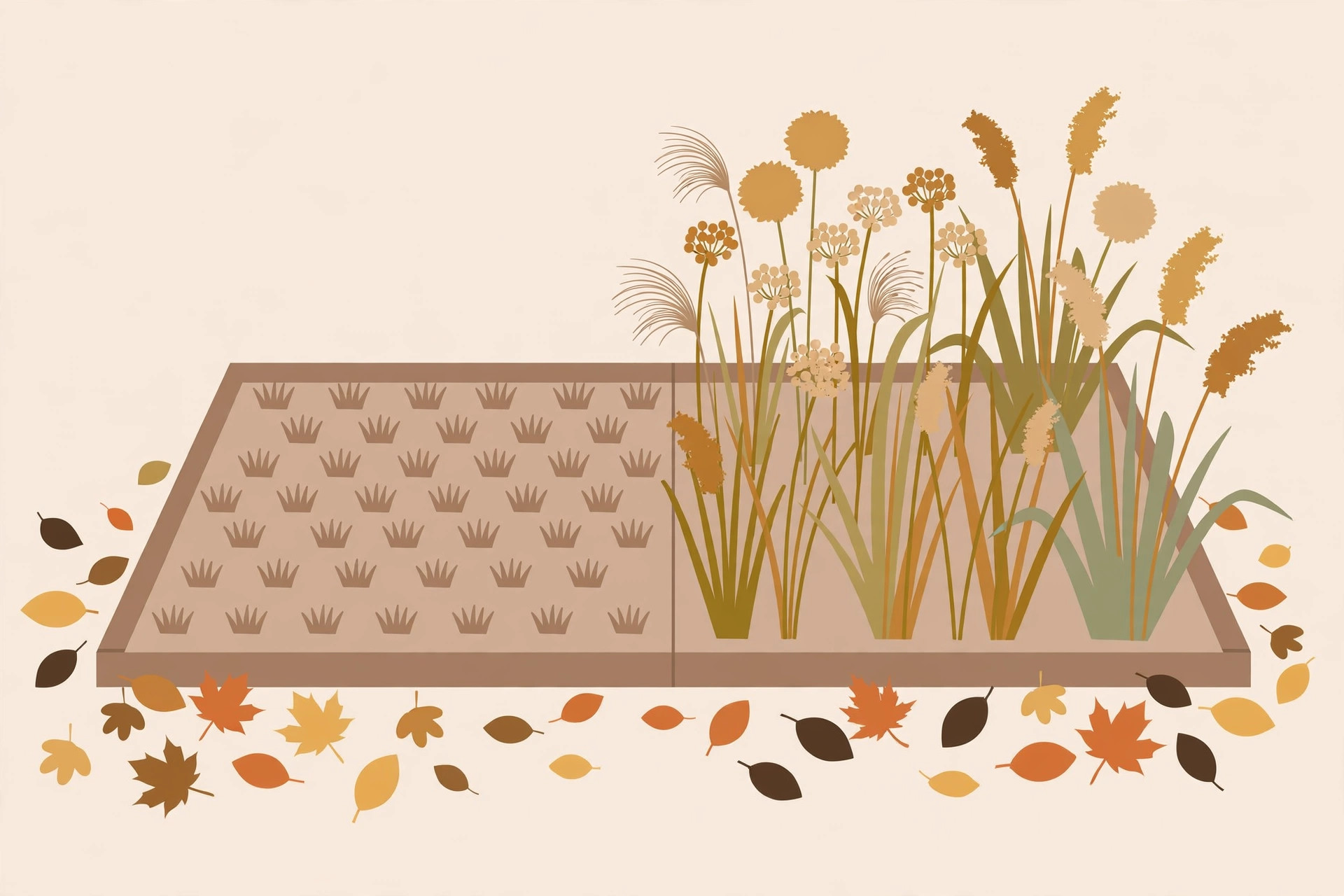
Wait for frost, not the calendar, the disease-risk list to cut back, the wildlife-value list to leave standing, and the 3-question rule.
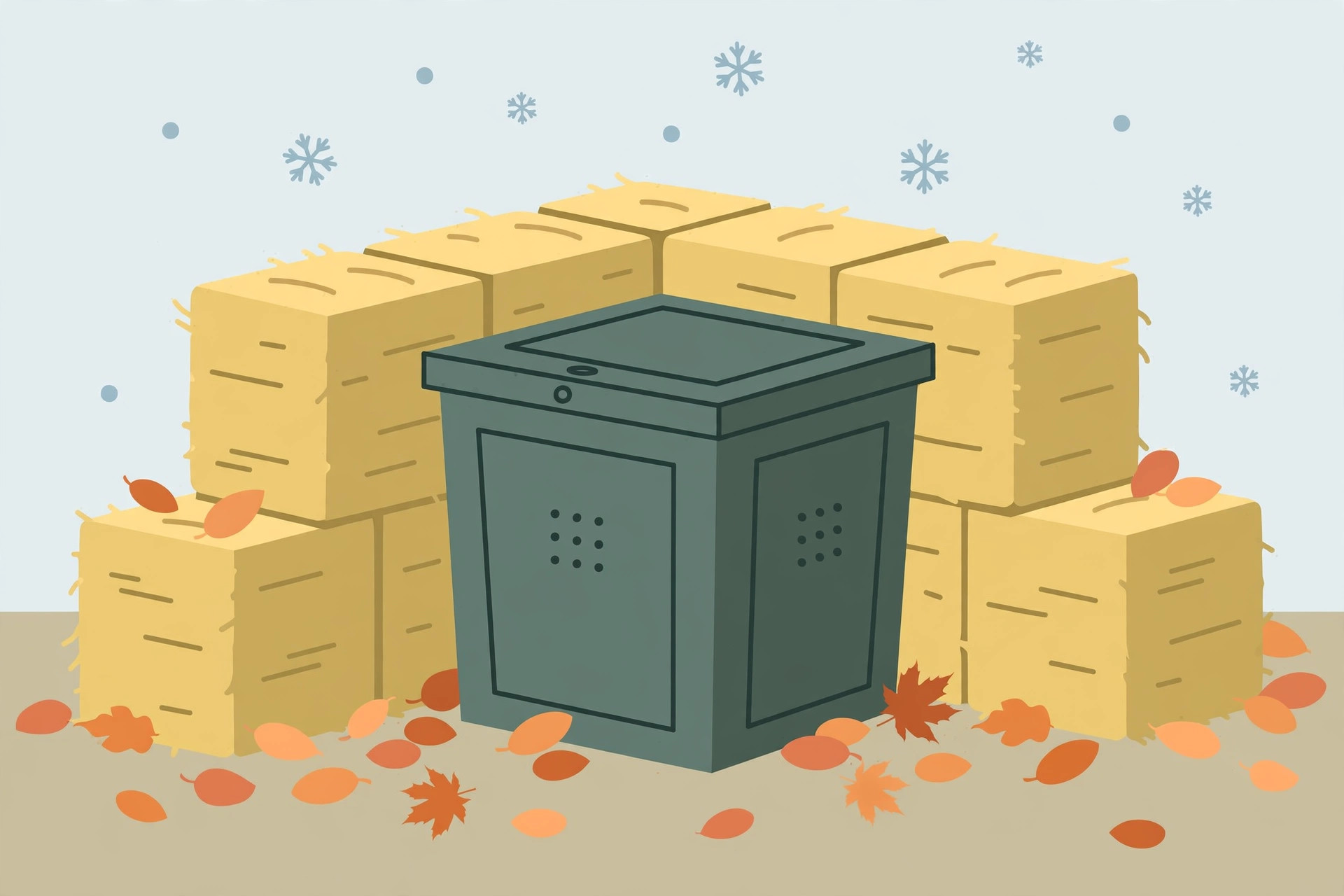
Two honest winter strategies plus the fall harvest sequence most guides skip, and the answer to turn vs. don't turn.
The full shutdown in the right order, clear, sort, feed, and protect the soil with a cover crop, mulch, or compost topdress.
Plant by the verified extension table, tulips and daffodils 6 to 8 inches deep, timed by soil temperature, and rank critter defenses by what actually works.
Identify the faucet type first: the drain-and-bleed sequence for standard bibs, the one mandatory step for frost-proof sillcocks, and sprinkler blow-out at the right pressure.
Winter mulch keeps soil frozen and stable, not warm, apply it after the ground cools, at the depth each plant type needs, and never in a volcano.
Creosote, the annual rule, and the DIY/pro split: the firebox and damper checks to run yourself, the sweep's inspection list, and the fuel rules that slow the next buildup.
Soft brush and garden hose vs the pressure washer: the manufacturer method, the freeze-risk warning, the weather window, and the window clean that doubles as a seal check.
The 50%-visibility pre-pass check, the 20% coverage cap, and the species split, maple vs oak, that decides whether to mulch-mow, rake, or bag.
Four ways to find drafts, the safe smoke-test sequence, the caulk vs weatherstripping vs foam decision table, and the priority order, doors first, windows second.
Clean, de-rust, disinfect, sharpen at the right angle, and oil, the 11-step procedure that puts hand tools away ready for spring.
Drain, divert, clean, store, in that order, with the winter downspout restored, a storage decision framework, and a spring reconnect checklist.
Inspect by target, not by tree: a ground-level walk-around ordered by what a dead branch hangs over, plus the line between ground work and an arborist call.
Three machines, three storage routines: gas walk-behind, riding mower, and battery mower, with the stabilize-or-drain fuel decision made from the manual.
One fall walk for fence, gate, and deck: drainage at post bases first, posts and gates second, deck boards and rails last, with a fix-now or spring rule.
Snow stake spacing reconciled by how you clear, plow, blower, or shovel, plus the 2-to-6-inch offset, the 2-foot road-side setback, and the walkway marks most guides skip.
Clean each material its own way, dry cushions until the corner-squeeze comes back dry, and make the store-inside vs cover-outside call per material.
Measure the depth first: the 75 / 100 / 120 cm tiers that decide whether fish stay out, de-icer vs aerator for the ice hole, and pump storage by pump type.
Start it this week: the five minute test, an ordered won't-start triage, the wear parts, and skid shoe settings for pavement vs gravel.
The full wrap is the mistake: decide by system type first, heat pump or cooling only, then protect the top, or leave the unit bare.
Triage by surface and width: asphalt vs concrete products, the closing November temperature window, backer rod rules, and the cracks not to fill.
Clean the grill, sort the storage decision by fuel, keep the propane tank outdoors all winter, handle the wire brush hazard, and know the spring recovery burn.
One fall pass for the sump pump: the five gallon bucket test, discharge verified outside, backup tested with the main pump unplugged, and the frozen line rules.
Extension floors for six deicers, from rock salt at 12 degrees F to calcium chloride at minus 25, the two bag system, and the first winter rule for new concrete.
One pass in irreversibility order: the see the grass leaf test, ground jobs before the freeze, shovel to the front, and the spring jobs refused on purpose.
Ice dams are a heat leak problem, not a roofing problem. The fall order that works: seal the ceiling plane, protect the soffit vents, clean the eaves, and skip the chipping and salt.
A shovel fails at the connection first. The fall inspection for blade edge, socket and rivets, and the wooden shaft, plus the CCOHS point that a bigger ergonomic scoop can just mean a bigger load.