Fall perennial cutback: which plants to cut, which to leave standing
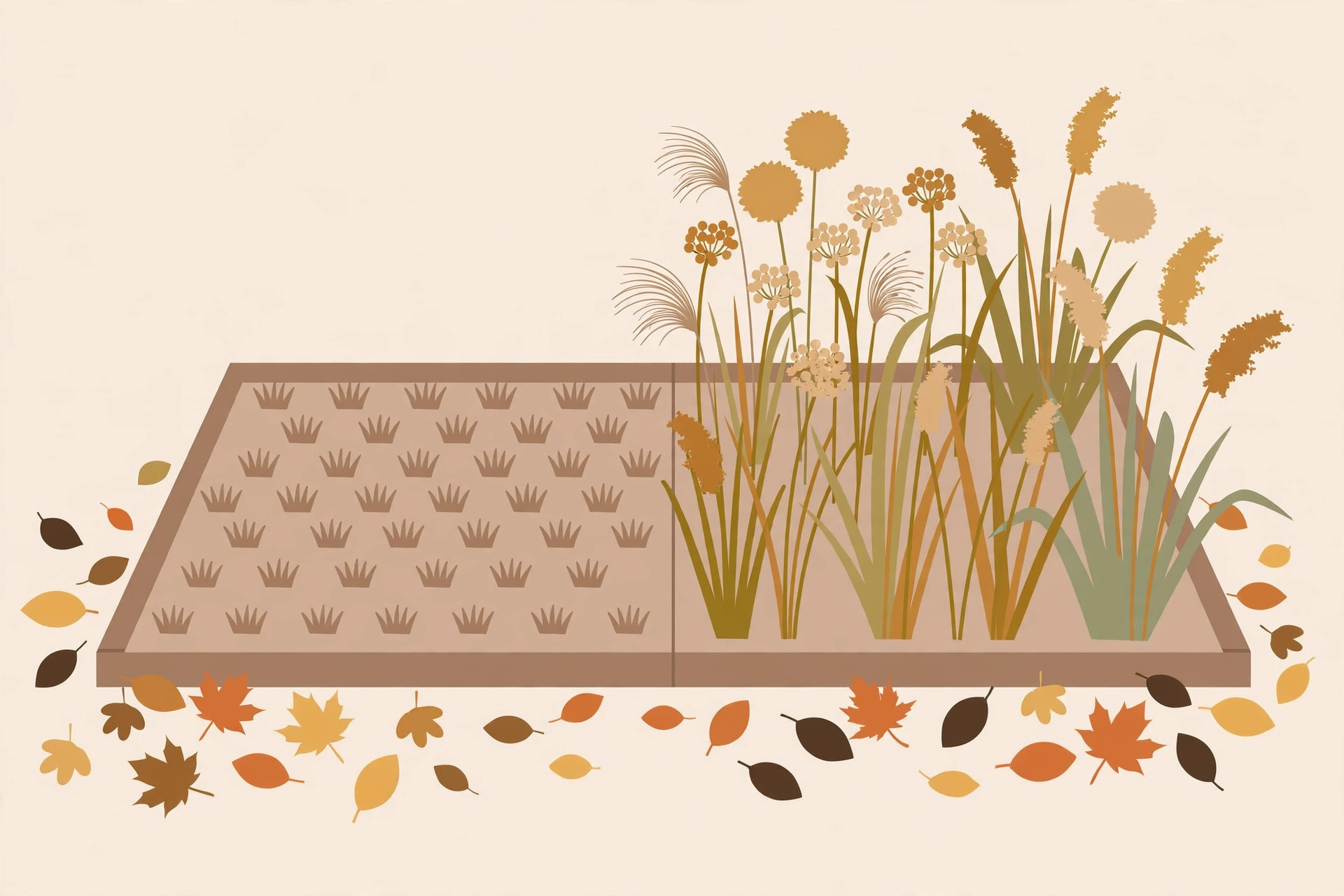
Cut-back advice is one of the most contradictory corners of fall gardening. One guide says cut everything back in October; a nursery expert says leave anything that's still green because it's still feeding the roots. They're both right about different plants. The trick is sorting your perennials into two lists — cut or leave — and knowing why each plant sits where it does.
The timing rule that settles the argument
Don't cut by the calendar — cut by the frost. If a perennial's foliage is still green, it's still photosynthesizing, and that energy is going into the rootstock for next year's display. Cutting it early gains you nothing and costs the plant reserves. The correct trigger is a hard frost that turns the foliage brown and mushy. After that, cut-back plants are safe to cut. If October ends with everything still green, your cutbacks simply wait.
Plants to cut back: the disease-risk list
These plants earn their fall haircut because leaving the dead foliage causes real problems — disease overwintering, pests, or fungal spread:
| Plant | Why it gets cut | How far |
|---|---|---|
| Peonies | Prevent fungal diseases from spreading | 2–3 inches above the soil |
| Bee balm (Monarda) | Prone to powdery mildew overwintering | Cut once flowers finish |
| Tall phlox | Prone to powdery mildew spread | Cut once flowers finish |
| Hostas | Mushy post-frost leaves harbor slugs and slug eggs | After hard frost; leave 2–3 inches of stem to protect the crown |
| Bearded iris | Iris borer eggs overwinter on the leaves and stems | After first frost; destroy the foliage, don't compost it |
| Daylilies | Remove collapsed, brown foliage to reduce pest problems | Remove spent foliage to the base |
| Shasta daisy | Reduce self-seeding and tidy the clump | Stems to a few inches above ground |
| Yarrow | Tidier clumps, healthier spring growth | Cut old stems after flowering |
Plants to leave standing: the wildlife and protection list
These plants do double duty all winter — bird food, crown insulation, and visual structure — and cutting them is actively worse than leaving them:
- Ornamental grasses — habitat for pollinators and winter structure; cut back in late winter or early spring instead.
- Coneflowers and black-eyed Susans — seedheads feed chickadees, finches, and other small birds all winter. Cutting is optional; leaving is kinder.
- Sedum (Autumn Joy and similar) — sturdy stems add winter interest and protect the new crowns.
- Russian sage — the standing stems protect the crown from winter rot.
- Hellebores and coral bells (Heuchera) — evergreen or semi-evergreen foliage protects the crown; cutting back can expose it to freeze damage.
- Ferns — many act as natural mulch for their own crowns.
A note on lavender: it gets only a light trim, never a hard cut — and never cut into old wood. If you already cut it back after summer flowering and it hasn't regrown, leave it alone entirely.
The 3-question decision framework
For any plant not on the lists, ask these in order:
- Has hard frost killed the foliage? If it's still green, stop. It waits.
- Is it disease-prone? If the plant had powdery mildew, borers, or fungal issues this season, cut it back and remove — don't compost — the foliage.
- Does it feed wildlife or protect its own crown? If yes, leave it standing until spring. Tidiness is the weakest reason to cut anything.
What success looks like
The finished bed has short stubble where disease-prone plants stood, standing seedheads and grasses everywhere else, and no mushy foliage matted on the ground. It won't look "clean" — and that's correct. The tidiness arrives in spring, when you cut back the standing plants just before new growth starts.
Don't bag everything. Healthy cut foliage goes to the compost pile; only diseased material (peonies with fungus, iris leaves with borers, mildew-covered bee balm) goes to yard-waste pickup. Cutting back and composting the clean stuff returns the nutrients the garden spent.